

The class of 2010-2011 (Part 3): Kei Trucks, Cargo Vans, and Other Useful Weirdos
- the DREAM
- Mar 22
- 19 min read
The best JDM work vehicles aren’t Supras or Silvias (grab your pitchforks, enthusiasts)—they’re the kei trucks, box vans, and light haulers Japan built to actually move stuff, now hitting Canada’s 15-year import window for 2010–2011 models.
This article is dedicated to the service vehicles that make logistics possible.

These weren’t show ponies.They were daily infrastructure.Proven across farms, cities, and depots—rust-free, low-km, and finally legal here.
Part 3 wraps our series with fleet-grade imports: tiny haulers that laugh at snow drifts, vans that Tetris cargo like wizards, pickups that skip the bloat, and baby trucks that punch above their GVW. We’re sticking to 2010–2011 (hello, eligibility sweet spot), spotlighting reliability stars with auction realities and Canadian caveats. Japan’s classes first, then the good stuff.
Japan’s Truck Ladder — Quick Decode and realistic thoughts
Japan sorts commercial vehicles by engine size, payload, and taxes — not cupholders or chrome. Kei class caps at 660cc/350kg for urban elbow room and scales up form there. By 2010–11, these classes were mature: emissions tweaks, better rustproofing, optional 4WD everywhere. Canadians gain rust-free maturity Japan stress-tested for a decade.
Japan Class | Engine/Payload | Examples (2010–11) | NA Equivalent Vibe |
660cc / 350kg | Suzuki Carry, Hijet | UTV/Side-by-side (farm paths, not highways) | |
1-ton Light | ~1.5–2.0L / 1t | Toyota TownAce, HiAce, Hilux | Transit Connect / NV1500 (small delivery) |
2-ton Medium | ~3–4L / 2t | Hino Dutro, Isuzu Elf | Isuzu NPR / small box truck (urban routes) |
But, the largest trucks in Japan are still much smaller and less powerful than North American pickups, because Japanese roads and tax laws favor compact designs[1]. In other words, Japanese manufacturers optimize trucks for efficiency and utility in tight spaces – not for brute hauling power. For example, Kei trucks (classed under 660 cc engines) are just 8’ long and only 48 hp, but they can carry a half ton. One-ton trucks (up to 2.0–2.5 t payload) often have 2.0–2.8 L engines producing around 150–200 hp. That’s great for Japan, but far below American standards.

Thus, Japan’s “truck ladder” goes from tiny Kei trucks up to compact 1–2 tonne trucks, but none match the raw size or horsepower of America’s full-size pickups. As one import expert notes, full-size pickups “remain unbeatable for towing, hauling, long-distance comfort, and brute force”[2]. In practice, this means you can’t out-tow or out-size an American pickup with a JDM import. North American trucks are built big for their market – for example, a Ford F-150 Raptor R pumps out about 720 hp[3], whereas even Toyota’s new Tacoma tops out around 278 hp[4]. And physically, F-150s and similar trucks are several feet longer, wider, and taller than any Japanese import. In short, if you need huge towing capacity or sheer payload, American trucks win on size and power every time[2][3]
#1: Kei Trucks — the little engines that could!

At the bottom of Japan’s ladder are Kei trucks: the micro pickups (e.g. Suzuki Carry, Daihatsu Hijet, Honda Acty, Subaru Sambar) with 660 cc engines and tiny 4×4 cabins. They’re tiny (about 8 feet long) but surprisingly robust – after decades of use they’re battle-tested farm and village haulers. Modern models (by 2010–2011) had four-wheel drive and fuel-injected engines with ~48 hp. Key selling points: unbeatable maneuverability and simplicity. They easily slip down narrow laneways and drift through snow drifts where a big truck can’t fit. Fuel economy is outstanding (~40 mpg), and parts are affordable (many share components with Japanese microcars). The downside is obvious: small engine = limited power, and confined space. Still, kei trucks “can surprise you” on short chores around the cottage or farm.
By 2010–2011, these four had hit peak maturity across Japan’s farms, villages, and delivery fleets: emissions-compliant, rustproofed to the gills, and available with dump beds, cube vans, or flatbeds as needed. Japanese long-term tests clocked them past 200,000km with basic maintenance, their mid-engine layouts and low-range 4WD setups shrugging off snow, mud, and overloads that would grenade a side-by-side.
Suzuki Carry, Daihatsu Hijet, Honda Acty, and Subaru Sambar represent Japan’s do-everything-small philosophy: maximum utility, effortless grip in slop, and bombproof longevity without pretense. They weren’t chasing Car of the Year bling — they were already the countryside benchmark.
Suzuki Carry (DC51T, 2010 refresh) The Suzuki Carry has long reigned as Japan’s undisputed kei truck champion, and by the 2010 refresh with the DC51T chassis code, it arrived with a mid-engine R06A 660cc three-cylinder that pumps out a peppy 64 horsepower through either a 5-speed manual or optional 4-speed automatic, complete with part-time 4WD and a proper low-range transfer case for when things get biblical. That year’s sharper styling and more aggressive front end didn’t just look good — dump beds became standard across most trims alongside cube-van and flatbed options, giving contractors and farmers endless configuration flexibility without custom fab work. What sets the Carry apart from its kei truck rivals is sheer ubiquity: it dominates auctions with the fattest aftermarket support in North America and Japan alike, which translates directly to the cheapest long-term ownership costs whether you’re chasing filters, brakes, or a spare diff.

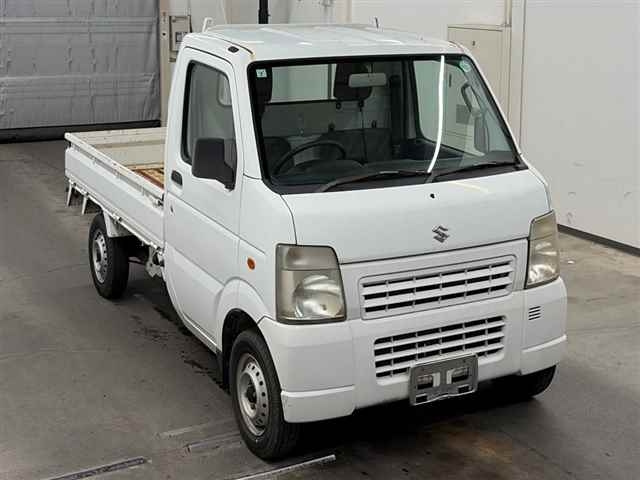

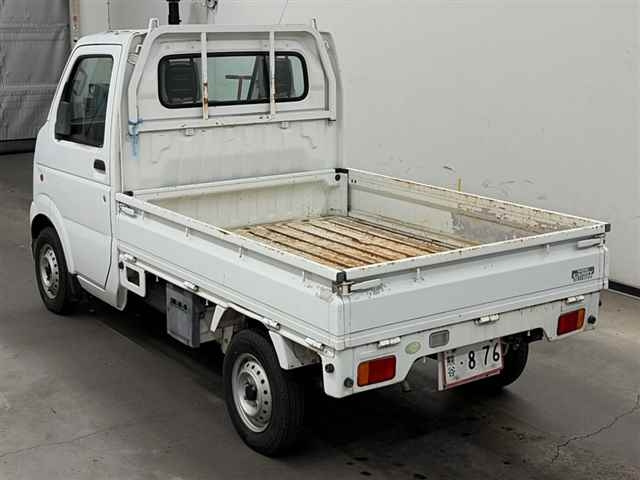
Grade 3.5 auctions: 30–50,000k km, $2,00–3,00 CAD
Daihatsu Hijet/Toyota Pixis (S201P/S210P)
The Daihatsu Hijet has always been the dump-bed obsessive of the kei truck world. Daihatsu remains a Toyota subsidiary focused on small cars and OEM supply. Toyota’s Pixis is essentially rebadged Hijet. By 2010–11 with chassis codes like S201P and S210P, it doubled down on that reputation thanks to its EF-series 660cc three-cylinder engine pushing a solid 64 horsepower to either a slick new CVT for city stop-go duty or traditional 5-speed manual, all backed by part-time 4WD and axle lockers that let you power out of situations bigger trucks would spin uselessly in.

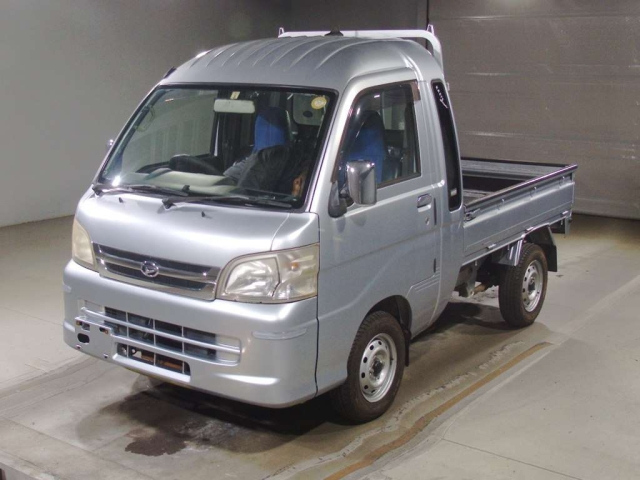

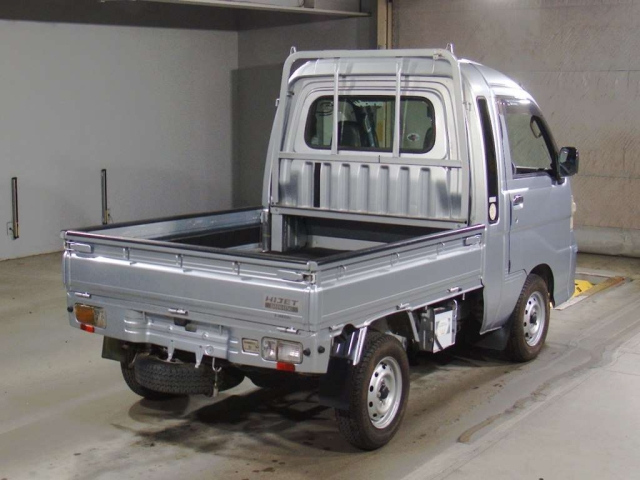

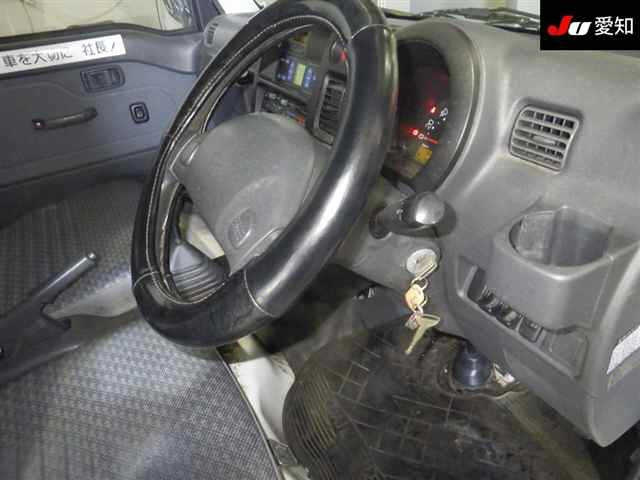

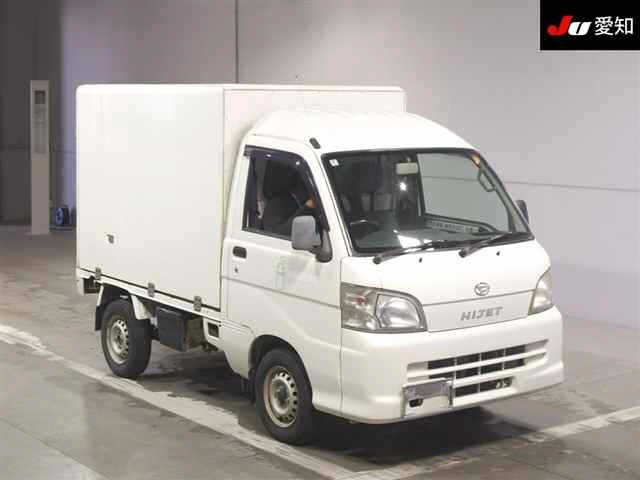

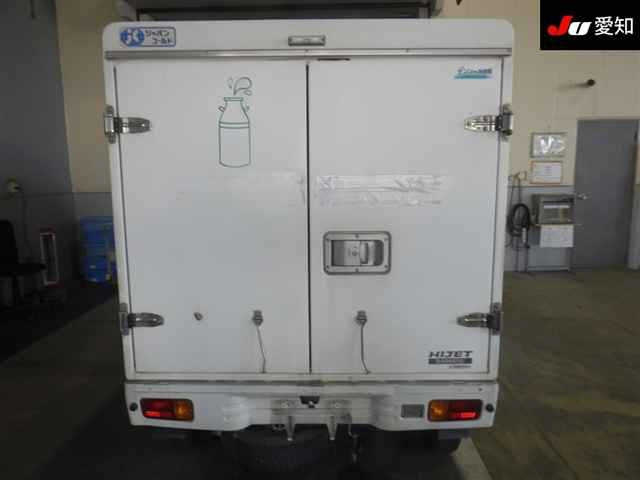
Auction Grade 4: 40–60,000 km, $2,500–3,000 - slight premium for dump supremacy. Ice cream is optional!
What truly sets the Hijet apart is its front-mid engine layout, which delivers the flattest, most usable load floor in the class — perfect when you’re tipping gravel or scrap without the engine hump ruining your day — plus those legendary scissor-lift dumps with the best bed angles and a wider track added that year for stability when loaded heavy. It sacrifices a bit of cab plushness compared to the Carry or Acty, but for pure hauling trades and farms where every cubic inch counts, nothing touches it; Japanese fleet data shows these routinely clearing 200,000km with just oil changes and clutch swaps.
Honda Acty (HA9/HA, 4WD)
Honda doesn’t mess around when it builds work vehicles, and the Acty (HA4 street truck, DA4 4WD van variant) proves it with a front-engine E07A 660cc four-cylinder tuned to 52 horsepower for kei compliance — smooth enough for daily commutes yet torquey through a 5-speed manual or optional CVT, with part-time 4WD that prioritizes finesse over brute force. By 2011, power steering became standard alongside improved rustproofing and a tighter turning circle than any rival, making it the campus shuttle or tight-trail king that feels more like a car than a truck while still offering dump beds or flatbeds for light duty. Where it shines against the Carry’s ubiquity or Hijet’s dump focus is pure drivability — Honda’s legendary engine refinement means less vibration at idle and the smoothest ride over washboard gravel, ideal if your “farm truck” doubles as the daily to town. These consistently rack up 150,000+ km in Japanese municipal fleets with minimal drama.
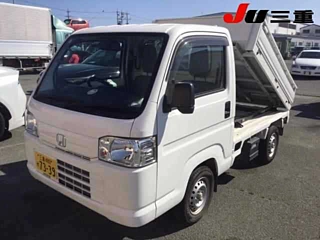

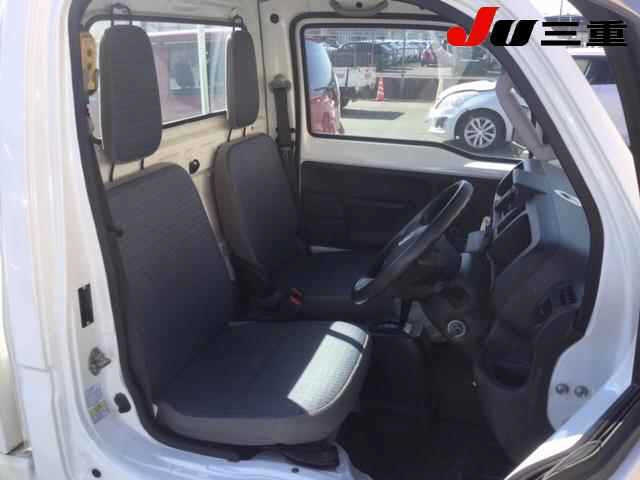
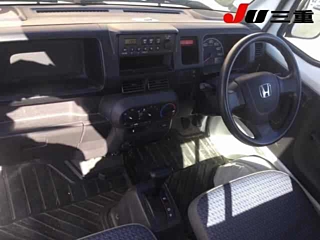

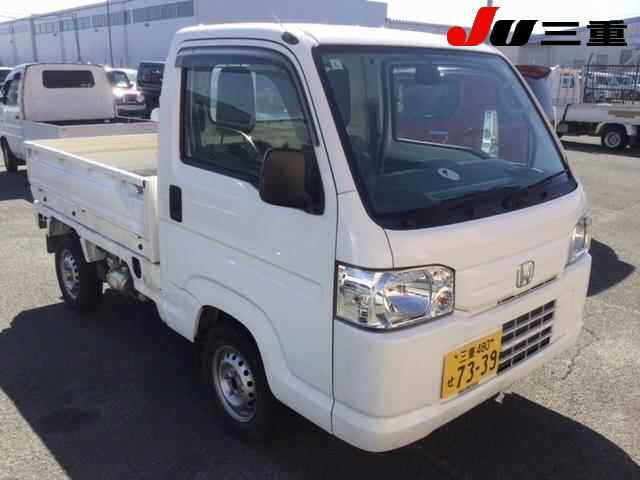
Auction Grade 3.5-4: 33–65000 km, $3,000–3,900 CAD.
Subaru Sambar (TT1 and 2; TV1 and 2)
Subaru brings its flat-four magic to kei trucks with the Sambar, where the EN07 660cc boxer engine churns 48 horsepower to a CVT or 5-speed manual, but the real story is full-time Symmetrical AWD with a low-range transfer case that grips wet snow and mud like it owes you money — outpunching the Acty’s part-time setup in anything less than ideal. The 2010 facelift added a modernized dash and better rust protection while keeping dump beds, cube vans, and flatbeds as core options, and though it’s the noisiest of the quartet thanks to that boxer buzz, the frame toughness and AWD reliability make it a cult favorite for anyone who’s ever watched a rival high-center. It’s rarer at auction than Carry or Hijet, so Subaru fans pay a bit more for that legendary slop-gripping confidence Japan’s ski resorts and logging roads stress-tested for decades — long-term reports show 180,000km lifespans common.

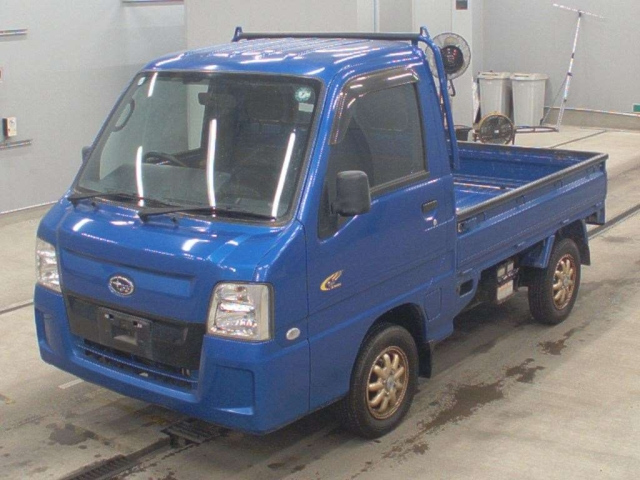

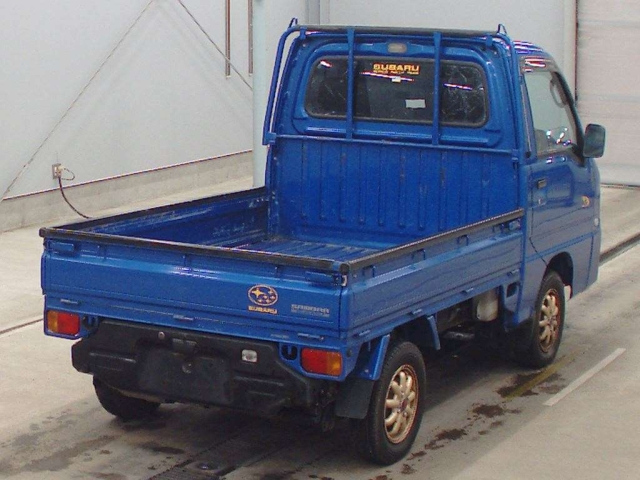
Grade 3.5: 25–58,000 km, $3,800–5,600 CAD — pays for grip.
What this means for Canadians Rust-free beaters for cottages, small farms, trails — way more road-legal than a Can-Am, cheaper than a used Ranger. Winter plowing? 4WD versions chew it.
Parts Reality Check: No NA twins — engines/transmissions share kei-car cousins (e.g., Suzuki parts cross with Samurai), but beds/glass are Japan-only. Importers like minitruck.ca stock filters/brakes; bodies from auctions. Uptime? Fine for side gigs, dicey for 24/7 fleets without spares.
#2: Utility Vans — Tetris Masters on Wheels
Step up from kei and you land in the world of full-size — or at least full-size by Japanese standards — vans: the stuff you’d actually want if the job is more serious than hauling hedge trimmers and two-by-fours.


If you can picture a job, there is probably a HiAce doing it in Japan
Japan’s equivalent of the van is exemplified by the Toyota HiAce (and similar Nissan Caravan/E25 and Mitsubishi Delica D:5). These are sturdy work vans (200-series HiAce) with 2.7–3.0 L engines delivering ~160–200 hp, and they can be outfitted for cargo or people.
They’re more compact than a North American full-size van, but still roomy and reliable. For example, the HiAce started with a 3.4L V6 (~165 hp) and later 2.7L i-Force engine (~175 hp) – enough to carry tons of payload.
While I would still take that with a grain of wasabi, you would almost laugh at that then thinking of an Econoline pulling those kind of K's.
That said. these JDM vans won’t haul as much as a large Sprinter or Transit. Their sliding-door quirks and manual doors are tradeoffs for simplicity. Parts are available (many mechanical parts are shared globally), but you may need to source some items via JDM import channels. In exchange, you get a rust-free van built with utility in mind – perfect for trades, delivery routes, or snow-plowing where tight maneuvering is needed.
The Toyota HiAce
The Toyota HiAce occupies a strange place in North American imagination. People here tend to treat it like some exotic forbidden fruit, but globally it’s closer to a default setting. Need to move tools? HiAce. Need to move tradespeople? HiAce. Need a shuttle van, work van, cargo box on wheels, or a future camper that doesn’t feel like driving a condo building?
HiAce Van (cargo; regular sized)

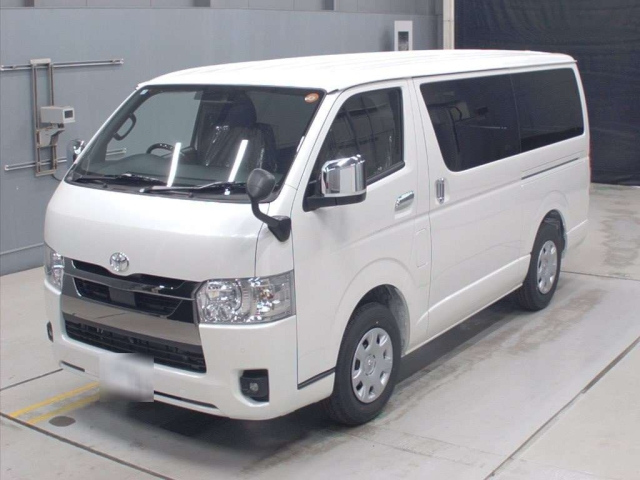

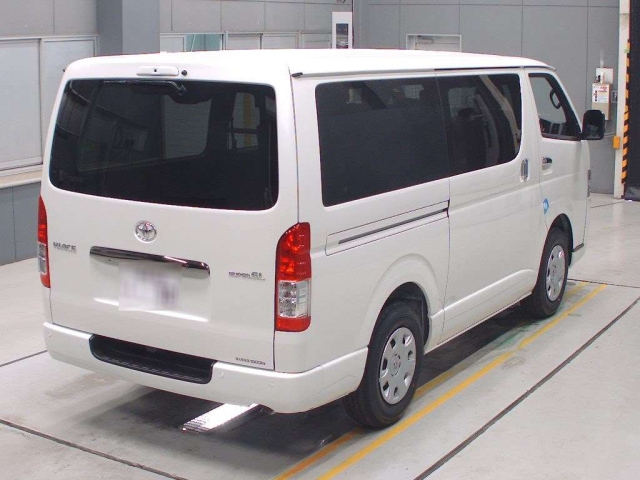

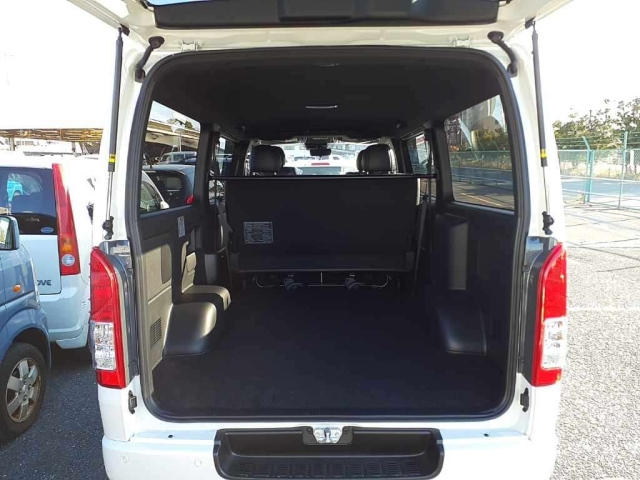
For the era this article is targeting, Toyota’s official Japan owner-manual index shows a HiAce Van documentation band covering the July 2010 through October 2013 — which cleanly anchors the generation window Canadians will care about as the 15-year rule continues rolling forward. https://toyota.jp/ownersmanual/hiacevan/index.html
That matters because it gives buyers something concrete instead of vague “2010-ish” auction optimism. And yes, optimism is very popular in auction listings.
There was an old chestnut that “many HiAce vans surpass 500,000 km” as a sourced certainty. That may well be true in the broad, cultural, everybody-knows-a-guy sense, but the current source pass did not locate an acceptable primary durability case study supporting that specific numeric claim, so it stays out. Which is annoying for drama, but good for accuracy.
What we can safely say is that the HiAce’s reputation exists for a reason: this is one of those vehicles that built its name by becoming boring in exactly the right way. Not boring to own, necessarily — boring to fleet managers. It starts, it hauls, it repeats. That’s the sort of reputation commercial vehicles earn only after years of being treated like appliances with deadlines.
Toyota HiAce (TRH219-223) or Toyota HiAce Van (TRH219-223) or
The Toyota HiAce cemented its legend through the 200 Series by 2010-11, offering buyers their choice of 2.7L petrol or refined 2.5L common-rail diesel engines making 100-130hp, with RWD or available 4WD plus massive 6m3+ cargo volume in super-long wheelbase configurations and optional air suspension for heavy loads. What sets it miles above the Caravan or Every is that unmatched Toyota service network and frame durability that's outlasted rivals in Japanese taxi fleets for decades. That mid-cycle refinement brought torque-focused diesel upgrades perfect for urban slogging, making it the undisputed everything-van Japan couldn't quit.
HiAce (Long DX ver pictured here). Otherwise the base model people mover is pretty much the same on the exterior as the HiAce Van

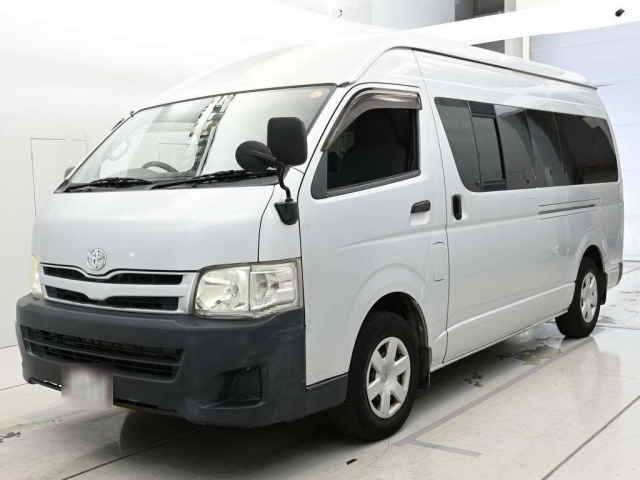

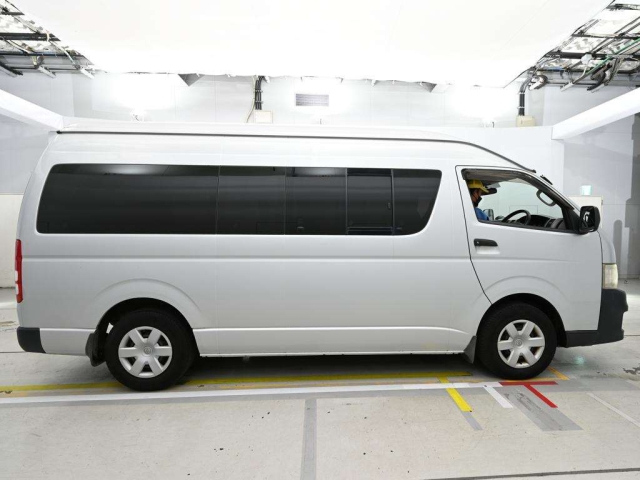

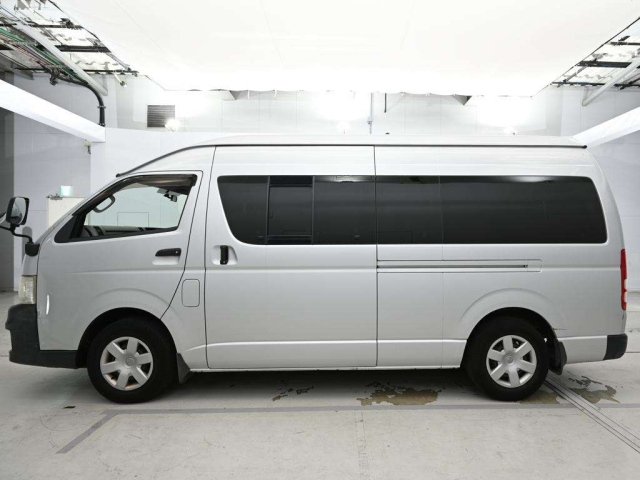

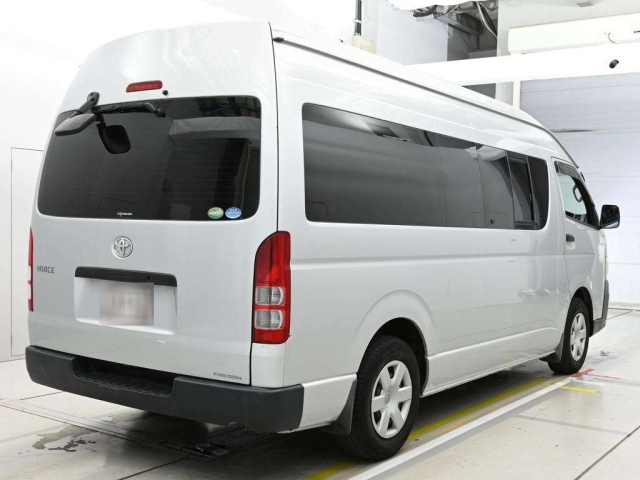
HiAce /HiAce Van (cargo) Auction Grade 4: 80-100,000 km, $8,000–14,500 CAD.
NB: Most of these 'older vans' will suffer from 'sliding door is on only 1 side' syndrome. Which ain't so bad when you realize it is the part facing the curb!
What this means for CanadiansFor Canadian buyers, the HiAce lives in that sweet middle ground between a compact work van and a full-fat commercial bruiser. It makes sense for shuttle use, small business cargo, service work, mobile trades, and camper conversions where you want interior volume without stepping all the way into giant North American van territory.
The practical caution here is not romance but paperwork: make sure the exact build date works for Canada’s month-and-year import rule, and don’t assume that “Toyota” automatically means every part is easy to source locally. The current verified base does not support broad interchange claims, so the safe version is the boring version: confirm parts by part number and be ready for some import-channel sourcing when the need arises
Nissan Caravan (E25, reliable workhorse).
Nissan refined the Caravan E25 through 2010-11 as HiAce's narrower, more agile sibling with 2.5L or 3.0L diesel engines pumping 100-140hp to RWD or 4WD setups with high-roof cargo flexibility, where that year's eco-diesel refresh improved fuel sipping while keeping crash structures competitive. It trades HiAce's bombproof ubiquity for tighter parking and lower entry price, delivering near-identical usability for city routes where Japanese delivery fleets regularly pushed past 300,000km without major surgery. The high-roof options and narrower stance make it the sweet spot when HiAce feels bulky but you still need serious volume.

Grade 3-3.5, 55 -75,000 km: $3,800 –9,000 CAD. Source: BeForward
Parts Reality Check
You're gonna be a little harder pressed to find Nissan parts for this outside an importer. Not impossible,.. but may not be worth your whlie
We even snuck a Kei in here,...
Suzuki Every (DA64V)
The Suzuki Every is the kind of van that makes you laugh once, then immediately start measuring things you could fit in it. The Suzuki’s environmental specification tables list the Every under light cargo as EBD-DA64V, using the K6A 0.658 L engine, with 2WD / 4WD availability, manual or automatic transmissions depending on variant, and a maximum loading capacity of 350 kg. https://www.suzuki.co.jp/about/csr/report/pdf/2006_envj_all.pdf That 350 kg figure is the sort of number that doesn’t sound dramatic until you remember how small the van is. It’s basically a fridge with windows that decided to become employable.

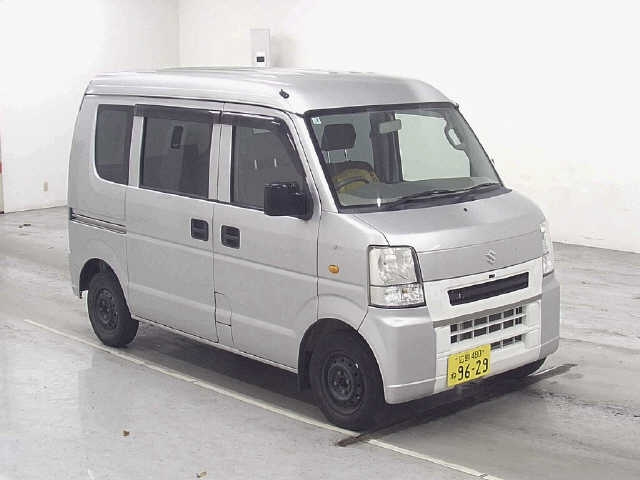

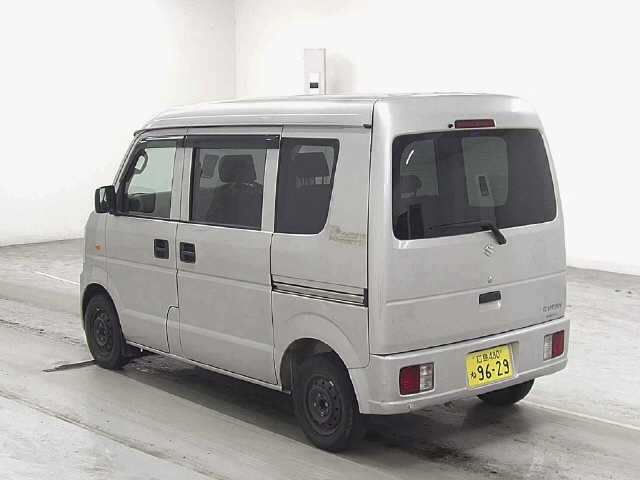


Grade 4 at 50-60,000km goes $2,500-2,900 CAD.
And that’s the charm of every Every. It was not designed to impress anybody in a parking lot. It was designed to survive delivery routes, shuttle errands, maintenance jobs, and all the thousand little tasks that keep businesses from falling apart. In a North American context, it looks like a novelty. In its intended context, it’s just competent.
Suzuki Every shrinks kei utility to genius levels with its 660cc engine feeding 4WD and sliding high-roof doors, where 2011 brought CVT smoothness and standard A/C that turned it into the perfect campus shuttle or resort runner beating larger vans on MPG and manoeuvrability. Unlike HiAce volume monsters, Every prioritizes 350kg payloads in a Smart-car footprint with Japanese campus fleets proving 150,000km lifespans through snow and tight alleys. That tiny package hides serious work ethic where parking wars favour the small.
What this means for Canadians
Parts? First off, good luck finding a Suzuki dealership in Canada. They stopped selling cars here in 2013. If it says Suzuki on it, it's probably a power sports equipment dealer (a la motorbikes and UTVs). You'll be taking this baby in to your local mechanic who loves it when something odd comes in.
#3: Pickups — No Tacoma Clones, But Smarter Haulers
Japan offered midsize pickups like the Toyota Hilux (not sold new in NA) and Nissan Navara/Frontier. The Toyota Hilux (especially 2005–2015 “Vigo” generation) is legendary worldwide. It comes in single or double cab with 2.7L gasoline (~158 hp, 181 lb-ft) or updated 2.8L diesel (~201 hp, 369 lb-ft)[6]. Hilux trucks are built to last – often rustproofed and simple. Their payload and towing (up to ~7700 lb) are impressive for a midsize. Many Canadian buyers swap out a heavier Tacoma for a Hilux diesel to get more torque and better fuel economy at modest speeds[6][7]. Hilux parts are common in Asia and Australia, but some U.S.-market parts (like V6 components) don’t apply, so be aware of trim differences.
Toyota Hilux and Nissan Navara embody Japan's no-nonsense truck philosophy: steel frames that laugh at rust, torque where it counts, and durability that skips awards for actual payloads—they were built to outlast everything else on the roster. Key point: Even these JDM midsize trucks are smaller and less powerful than North America’s full-size pickups. No Japanese truck (aside from the rare Toyota Mega Cruiser or imported Hino/Isuzu diesels) comes close to the length, width, and V8+ power of an F-250 or Silverado 3500. So, if you need maximum size or horsepower, you simply buy a North American truck. For raw towing, even the best JDM diesel can’t beat a 6.7L Power Stroke V8 (Ford), 6.6L Duramax (GM), or Cummins turbodiesel (RAM), which put out 400–480+ hp and tow thousands of pounds.
For example, the 2024 Ford F-150 Raptor R makes about 720 hp[3] – far above the Tacoma’s ~278 hp[4] – underscoring that “full-sized pickups remain unbeatable for towing [and] brute force”[2].
In short, you can’t “out-Cummins a Cummins” by importing a Japanese truck
Toyota already makes the biggest one it sells to North America, and local full-size trucks already overshoot any JDM competitor in heft and power. Toyota’s own Tacoma is built in North America for the NA market – not shipped from Japan. Since 2021, all Tacomas are assembled in Mexico[5][1]. Toyota did make Tacomas in Texas for years, but even today North America (Mexico) is its production home[5][1].
Toyota Hilux (2011 refresh; Vigo)
If the HiAce is the world’s rolling utility knife, the Hilux is the pickup equivalent: the global reference point people bring up whenever the conversation turns to “vehicles that have seen things.” Toyota’s own Hilux history material states that the nameplate debuted in March 1968, giving it the kind of lineage most manufacturers would happily turn into a museum wing if they thought customers would pay admission.

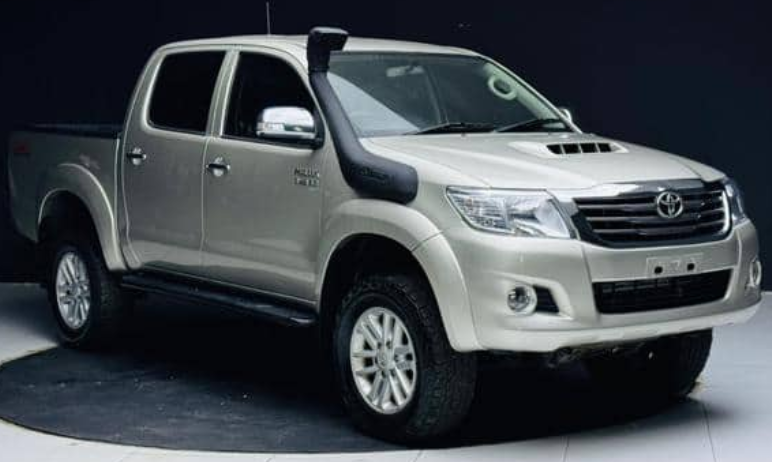

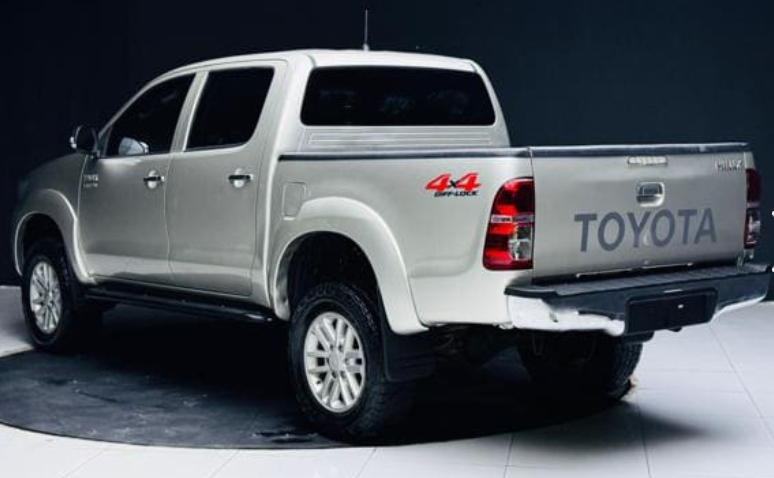
At Auction: Hilux grade 3.5+, 60-70,000k km, $12-16,000 CAD. Source: BeForward
That long lineage matters because it explains why the Hilux occupies such a strong place in global truck culture. It’s not just old; it’s established. It has had time to become shorthand.
Coming in both a single and a double cab, Toyota Hilux powered through 2011 with 2.7L or 3.0L diesels making 150-170hp to coil-spring 4x4 setups where stability control refined the cab ride over Navara's roughness, delivering 1-ton payloads and 2.5-ton towing that farm fleets (and mounting the occasional heavy machine gun) across Asia and the middle east. What crushes North American Tacoma lifestyle trim is zero dead space, eternal rust resistance, and that legendary frame flex under overloads Japanese operators proved for decades.
What this means for Canadians Ditch Tacoma air-weight for Hilux steel — nimbler on backroads. Navara for gravel pits: torque where it counts, MPG Tacoma dreams of. No V6 bloat. The Hilux is lives in a space adjacent to the compact and midsize truck idea North America used to understand before trucks started cosplaying as semi's. That does not mean you should assume interchangeable parts, familiar trims, or effortless local service on every configuration. But Toyota's global supply change and large parts standardization make this engine servicing pretty easy.
Nissan Navara/Frontier (D40, global spec)
The Nissan Navara is the Japanese twin to the North American Frontier. Global Navaras of that era had 2.5–3.0L diesels (150–174 hp) or a 4.0L V6 (270 hp) for some markets. They generally trade a bit of refinement for lower price, and double-cab Navaras are fairly roomy. Like the Hilux, a Navara won’t match a Tacoma’s 278 hp (non-hybrid), nor Ford/GM half-ton trucks. But they offer solid utility in a package designed for right-hand drive roads.

Auction Grade 3.5, 75k km: $6,000–7,500 CAD. Source: Nissan Cars
What this means for Canadians Frontier NA cousins share quite a few mechanical and panels with the Navara, which will make servicing almost effortless
#4: Light Fleet Trucks — Hino’s Baby Dutro

Japan’s city semis aren’t Peterbuilt monsters. They’re nimble 2–4 tonners for tight streets. Cabover, walk-through, diesels that sip — fleet replacements for two Transits. Whether it’s 100km delivery loops where semis feel clownish or swapping two Transits for one rustproof box, Japan’s cabover 2–4 tonners make city streets playgrounds. And yeah, they exist here in left-hand drive format.
Japan’s light-duty trucks (up to 3.5–5 ton GVW) are brands like Hino (a Toyota subsidiary), Isuzu, and Mitsubishi Fuso. The Hino Dutro (also sold as Toyota Dyna/Toyota Toyoace) is a common 1–1.5 ton truck in Japan, with diesel engines around 4–5 L producing ~150–200 hp. In Canada, these show up in deliveries and city service fleets. They’re simpler than American medium trucks (like the Ford LCF or UD trucks which have bigger cabs and safety features) but are rugged and have good maneuverability. Parts can be scarce, but these trucks excel in right-hand-drive islands or where strict emission rules and compact design are needed.
Similarly, medium-duty trucks (Hino 4-ton, Isuzu Elf/NPR) offer Japanese reliability, but again they are physically smaller than a U.S. medium truck. They’ll haul cargo and tow trailers within Japan’s limits, but they won’t out-haul a North American 3/4-ton. However, for many Canadian operators (island communities, camps, municipalities) a Hino 3-ton can be the perfect match for daily logistics without the bulk of a Ford 450 or Freightliner 108.
Hino Dutro (XZU300/400, 2-ton series)
The Hino Dutro is the sort of truck that quietly proves Japan didn’t just build cute utility oddities — it built an entire ladder of work vehicles from micro-trucks up to serious fleet machinery. Hino’s environmental reporting describes the Dutro as a light-duty truck introduced in 1999, and notes it was developed jointly with Toyota. It also references emissions and efficiency design features, including EGR-related points, which helps place the truck firmly in the practical, fleet-minded world it was designed for. https://www.hino.co.jp/csr/backnumber/pdf/env_report2001.pdf
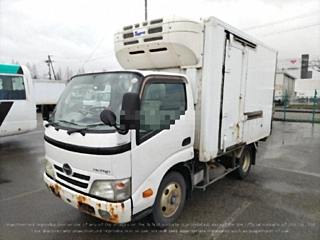
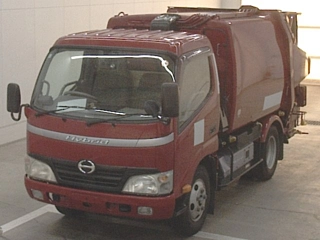
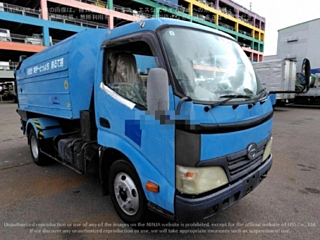

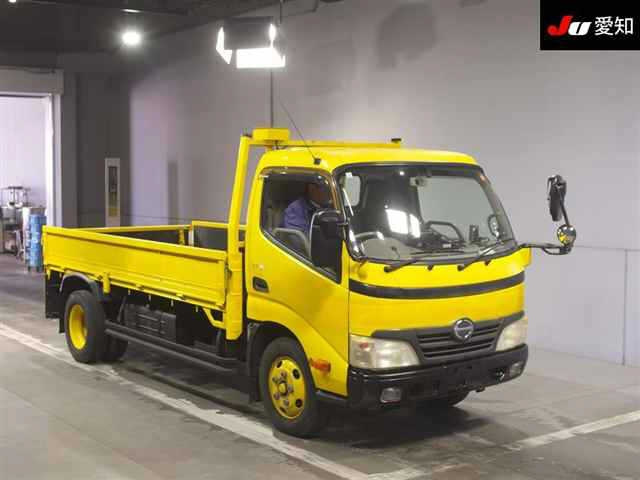

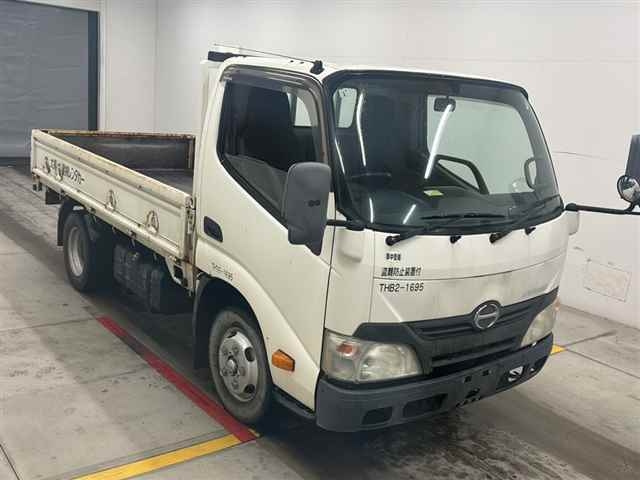

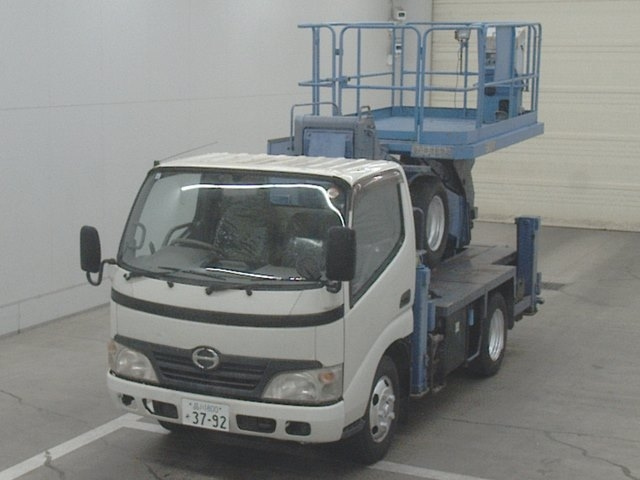
Auction Grade 4 cab-chassis at 60,000km are basically unheard of. They work these hard. So, Auction Grade 3 at 15 years and 200,000kms+ runs you around $6,500 CAD.... at which point you should be asking yourself if this was the right decision.
For current lineup reference and catalog access, Hino also maintains an official Dutro product page. That doesn’t magically turn every older auction truck into an easy buy, of course, but it does help establish that the Dutro isn’t some obscure dead-end nameplate. It belongs to a very real commercial ecosystem that also exists in Norht America - just LHD.
Hino Dutro mastered 2-ton urban runs with 4.0L/4.6L DOHC diesels at 150-180hp through cabover auto/5MT with 4WD options, where 2010 low-floor cabs beat NPR turning radius for city wizardry Japanese logistics fleets pushed past 500,000km. Same Isuzu NPR roots give dealer support but tighter agility shines in Tokyo alleys, outmaneuvering larger siblings. That emissions-compliant grunt fits short-haul perfection.
What this means for Canadians: Baby Isuzu NPR for routes under 100km — maneuverable, efficient, rustproof. Hino winters? 4WD options exist. Small fleet? One replaces two Transits. For a parts reality check, Hino's155/195 NA twins share drivelines — engines/trans at dealers. Cabs/boxes Japan-only. Strong support via Hino Canada; import panels cheap. Best fleet bet here.
Canadian Import Considerations
Here’s the rule that makes this entire article possible: vehicles older than 15 years are not regulated at importation time under the Motor Vehicle Safety Act, with the process instead focusing on border entry, ownership proof, taxes, duties, and admissibility under the relevant customs rul=9
The important part — the part people miss while browsing listings at midnight and making reckless emotional plans — is that the age is determined primarily by the month and year of manufacture shown on the compliance label, not the sales listing’s idea of what “2011-ish” means.
Buy one too early and you might be paying $150 a month still their old enough to import.
And one more cold shower: successful import does not guarantee successful provincial registration. This is more of a cautionary note for our 2-tonners. Some provinces maintain restrictions affecting right-hand-drive vehicles or certain branded-title situations, so the smart move is still to check local rules before you buy first and become furious second.
Parts and Service Reality for Fleet Vehicles
I’ll keep this blunt, because this section should sound like advice, not flirtation.
Mechanical service items are often manageable if you plan ahead. Filters, belts, normal maintenance pieces — those are the boring victories. Body panels, trim, glass, and weird low-volume bits are where JDM ownership stops feeling charming and starts feeling like detective work with shipping fees. CHeck forums on FB; lots of good advice for Kei owners there.
But, if the vehicle is going to be business-critical, don’t shop like a dreamer. Shop like a person who understands lead times, backups, and the emotional cost of explaining to a customer that your van is stuck waiting on a window regulator from the other side of the Pacific.
Where These Work Best in Canada
This is the part where we stop admiring the weird little boxes and ask the useful question: where do these actually make sense in Canada?

The obvious answer is anywhere space is tight and the job is practical rather than theatrical. Farms, acreages, campgrounds, marinas, orchards, service roads, and wooded properties are the natural habitat for kei trucks and small Japanese work vans. If you’re hauling tools down a narrow bush trail, bringing feed across a property, or trying to snake through a lane that was clearly laid out by somebody who had never seen a modern North American pickup, these vehicles start making a lot of sense. They were built for maneuverability first, ego last — which is not always how we do things over here.
But there’s another Canadian use case that deserves more attention: islands and coastal communities. Vancouver Island, Newfoundland, Prince Edward Island, parts of Nova Scotia and New Brunswick — places where roads twist, towns are older, back alleys are tighter, and shipping parts in is already just part of life. In those places, the “but what if I have to wait for parts from Japan?” argument loses some of its sting, because you may already be waiting on parts for plenty of vehicles anyway. At that point, the question becomes less about whether parts travel and more about whether the vehicle actually fits the environment. And on winding coastal roads, cramped service lanes, and older town layouts where bulk becomes a liability, a Suzuki Carry, Toyota HiAce, or Hino-style cabover can feel a lot more at home than a bloated domestic van or full-size pickup.
This is basically Japanese street-and-worksite logic dropped into the parts of Canada where big vehicles suddenly seem a little overconfident.
When None of This Is for You
Now for the less romantic truth: some of these vehicles may simply not be for you, and that’s okay.
If your business is running multiple vehicles hard, all day, every day, and stacking kilometres at an alarming rate, the smartest answer may not be “buy an older imported work vehicle and hope for the best.” In many high-use fleet situations, businesses lean toward lease-or-replace models because the priority is predictable cost, lower upfront capital, and minimal operational surprises. Leasing is often attractive when cash flow matters, because it avoids a large initial outlay and spreads costs into regular payments; Element Fleet Management notes that leasing is often chosen for flexibility, lower upfront costs, and access to newer vehicles, while ownership tends to suit businesses with stronger capital positions and longer planning horizons.
Where outright ownership starts to shine is in a different kind of business case:
moderate use,
seasonal work,
lower initial buy-in,
and a plan to keep the vehicle long enough that owning it actually matters.
That’s where older Japanese work vehicles become compelling. Yes, insurance may run a bit higher on a JDM vehicle, and yes, you need to be more deliberate about parts and maintenance planning. But once it’s yours, it’s yours. No kilometre penalties, no lease-end stress, no hand-wringing over wear charges because someone scratched the bumper loading a snowblower in February. And if your business values long operational life, ownership can make sense precisely because you are building value in an asset you intend to keep; Element notes that businesses often prefer ownership when they expect longer service lives, want asset control, and are willing to budget for ongoing maintenance rather than preserving short-term liquidity.
So the better rule is not “high kilometres means lease” or “cheap import means buy.” The better rule is: lease when flexibility, turnover, and cash flow predictability matter most; buy when the upfront math works, the use case is steady rather than punishing, and you intend to keep the vehicle long enough to actually benefit from owning it
Which one's your pick?
Japanese work vehicles don’t chase headlines. They chase schedules. And that’s exactly why they matter.

As Canada’s import window keeps rolling forward month by month, more of these kei trucks, vans, pickups, and light commercial haulers are becoming legally reachable for buyers willing to look past the usual sports-car obsession.
They may not be glamorous. They may not even be especially pretty. But they were built to do one of the hardest jobs in the automotive world: start every morning, do the work, and complain as little as possible.
Which, honestly, is a kind of beauty too.
Comments?
Drop your auction finds, fleet war stories, or "wait 'til you see this Hijet dump angle" pics in the comments. What's hunting your list for 2026 imports?
Let's build the thread.