

Just Off the Boat and Straight Into a Blizzard: Winterizing Your JDM Vehicle (Part 1)
Updated: Nov 18, 2025
If your freshly imported JDM is about to become your daily driver through a Canadian winter, you need to prep it properly—or watch it dissolve in real time.

Hey, welcome to November. The snow showed up without knocking. Now, everyone forgets how to drive, and suddenly the Canadian Tire tire-swap line looks like the queue for a Taylor Swift concert.
Meanwhile, your shiny new JDM import is sitting in the driveway wondering what it did to deserve this fate. It’s barely adjusted to North American gas prices, and already you can hear the road salt sharpening its knives.
So before your car becomes a crusty archaeological exhibit, let’s talk about how to prep your Japanese treasure for six months of frozen Canadian nonsense. We’re mixing general winter wisdom with some JDM-specific survival hacks—because your imported ride needs more than admiration and premium fuel to get through a snowstorm.
Your JDM may not be ready for the Canadian Winter
Here’s the thing about Canada in winter: it’s less of a “season” and more of an endurance trial. It’s six months of cold, chaos, ice, salt, and the occasional existential crisis. And if you feel unprepared, wait until you meet your imported car’s factory fluids.
Your JDM machine might be immaculate at 15 years old—because Japan treats cars like delicate bonsai trees—but that doesn’t mean it’s ready for life in the land where we blast roads with enough salt to season a small nation.

Japan does have snowy regions (Hokkaido, Nagano—hello ski resorts!) but across most of the country, winter is way gentler. Where Canada relies on salt trucks that roam the streets like feral beasts, Japan uses all kinds of alternative methods: heated roads, underground pipe warmers, and in some towns, literal hot-water sprinklers that melt snow as it lands.

That means Japanese cars grow up in a spa.
Canadian cars grow up in a war zone.
So your fresh import rolls into Canada all excited… and then gets slapped in the face by black ice, –30°C temperatures and a coating of salt thick enough to pickle a cucumber.
And for those of us in southern Ontario, that’s the easy part.
Head up north and you’re living in a place where “–40” isn’t a temperature, it’s a lifestyle. If your JDM isn’t prepped properly, you’ll be doing more than scraping your windshield. You’ll be negotiating with your starter motor like it owes you money, and every CAA call will feel like getting another stamp from the tow truck towards a free foot-long sub.
Fluids & Rust: The Lifeblood and Armor
Winter Survival Guide: Keeping Your JDM from Becoming a Popsicle on Wheels
So you’ve brought over a JDM import as a daily drive, and now it’s time to make sure it survives a Canadian winter. Unlike domestic models, JDM cars weren’t built with our kind of snowpocalypse in mind. Extra steps are needed to keep your RHD ride from turning into a frozen, salt-rusted museum piece.
Tires: Spinning you right round baby right round.

Winter roads aren’t forgiving, and “all-season” tires are basically a marketing myth—unless you live somewhere cherry blossoms outnumber snowplows. Real winter tires stay flexible when the mercury drops and have treads deep enough to grip snow like a sumo wrestler in cleats. Once temps dip below ~7 °C, all-season or summer tires stiffen up, lose grip, and your stopping distance shoots up. Transport Canada calls this out: “wide, high-performance tires … aren’t suitable for snow-covered roads.” Stock JDM tires might limp through a light dusting back in Japan, but on real Canadian winter roads they’ll have you fishtailing into a snowbank. That means you’ll need better rubber if you don’t want your RHD toy turning into a salt-crusted museum piece.
So here’s your game plan:
Swap in tires with the 3PMSF (Three-Peak Mountain Snowflake) mark — they’re certified for severe snow service.Full URL: https://www.continental-tires.com/products/b2c/tire-knowledge/buying-winter-tires/?utm_source=chatgpt.com
Check tire pressure often — cold air shrinks pressure, which kills traction. Multiply that by the fact that your JDM might already have older rubber.
Don’t treat winter tires like fashion — they’re your survival gear. Recent Canadian tests note that above 7 °C the wrong tires start the downhill slide into trouble.Full URL: https://mmpautorepairs.ca/best-winter-tires-in-canada/?utm_source=chatgpt.com
If you follow that, your JDM will start confidently instead of complaining, and you’ll keep those snow-covered Canadians behind you in the rear-view instead of ahead of you at the diner.
In addition, many insurance companies will offer insurance discounts on rate for owners who have/use them!
Wipers & Windshields

Raise your arms in the air... when you can. Most of us lift our wipers pre-storm so they don’t get glued to the frozen glass by a snow+salt combo. But with some older JDM imports the wiper assembly is tucked too close to the hood, or the arm shape prevents that “park up” position.
One forum thread documented a scenario: “Cannot raise windshield wipers” on a Nissan import. Nissan Club Another quirky write-up from Japan’s nostalgic car scene shows how Toyota wiper arms have changed and how parts get weirdly non-interchangeable. Japanese Nostalgic CarIf your car’s hood or arm geometry blocks the “lift” trick, you’ll want to swap to a better arm/blade combo that does allow lift, and ensure it’s a cold-weather rated type (winter rubber is your friend).
Even when the arm lifts fine, the blade might be tired, the rubber old (especially on low-km JDM imports), or simply not built for salt-sprayed –25 °C mornings. Replace your blades and washer fluid early
Washer fluid
Washer fluid is simply no joke. Canadian washer fluid is rated for at least –40 °C; however, Japanese market fluids may only be rated for milder winter conditions. As soon as you get your car, just blow out all the wash fluid and put in a fresh batch from Canada.
If you don’t, it can literally freeze in your engine. Then you'll have to wait for the temperatures when it naturally melts. Or, have your local mechanic pull the washer pump and stick it on a heater overnight to defrost everything.
Don't ask me how I found that out. .. -_-'
Engine Oil Upgrade & Viscosity Facts

Your JDM may have rolled off a lot smoother winters in Tokyo, but when Canadian humidity and Arctic blasts show up, oils thicken faster than maple syrup in January. That’s why low-temperature viscosity matters. Oils labeled 0W-20 or 5W-20/5W-30 flow easier during cold starts and protect your engine by reaching parts faster (Flipcars ; Napa Canada) and
JDM vehicles generally use oils that aren't rated to colder Canadian temperatures. So, switch to a winter-grade oil keep your engine turning over smoothly instead of screaming in protest.
Battery & Cold Crank Amps: The Morning After the Deep Freeze

Cold makes batteries die faster than a TikTok trend. When the mercury nosedives, that cheerful little JDM starter suddenly sounds like it’s begging for mercy. Check your terminals for corrosion, keep it fully charged, and if your battery’s older than your snow brush, replace it before it leaves you stranded in a Tim Hortons parking lot.
Here’s the catch: Japanese cars use JIS-standard batteries that simply weren’t bred for Canadian winters. A typical JIS 80D26L only musters around 505 CCA (Cold Cranking Amps) — fine for Tokyo mornings, but not for a Saskatchewan January. (MDS Battery UK) Canadian replacements, on the other hand, average 700+ CCA, giving you the grunt to spin an engine that’s frozen harder than a maple taffy pull. (NAPA Canada) Do yourself a favour and swap before the first polar vortex hits—because “just one more start” is the last thing a weak battery ever says.
Block Heaters: Your Engine’s Winter Blanket
What is a block heater? For those of us who live in warmer climates, we've probably never seen one. If your car comes with it at all, it basically looks like a plug that comes out of your engine. What does it do? It gently warms the engine block (duh!), thins the oil so it flows properly, reduces strain on the battery during cold starts, and helps the cabin heater produce warm air much faster. It keeps your engine warm enough to start without sounding like it’s coughing up its last breath (Canadian Automobile Association). While those of us south of the 49th (and those lucky Vancouverites) don't usually find much use for them, anyone who regularly deals with consistent –30 °C temperatures will tell you how ciritcal this is.
That said, most JDM imports don’t come with block heaters—because Japan’s idea of “winter” is what we call “a brisk fall morning.” If you’re bringing that Crown, Alphard, or WRX home to that part of Canada, plan to install an aftermarket unit unless you enjoy the sound of your starter motor begging for mercy one cold February morning. Just make sure you get one rated for North American voltage (120 V, 60 Hz)—Japan runs on 100 V and slightly different cycles, so don’t try to plug in a domestic Japanese heater unless you’re into the smell of cooked wiring. (Japan Guide – Electricity in Japan). If you're bringing in something with a North American equivalent (like a 4Runner or Accord), check with your local dealerships. They may have the perfect part for you!
Driving in a Winter Wonderland
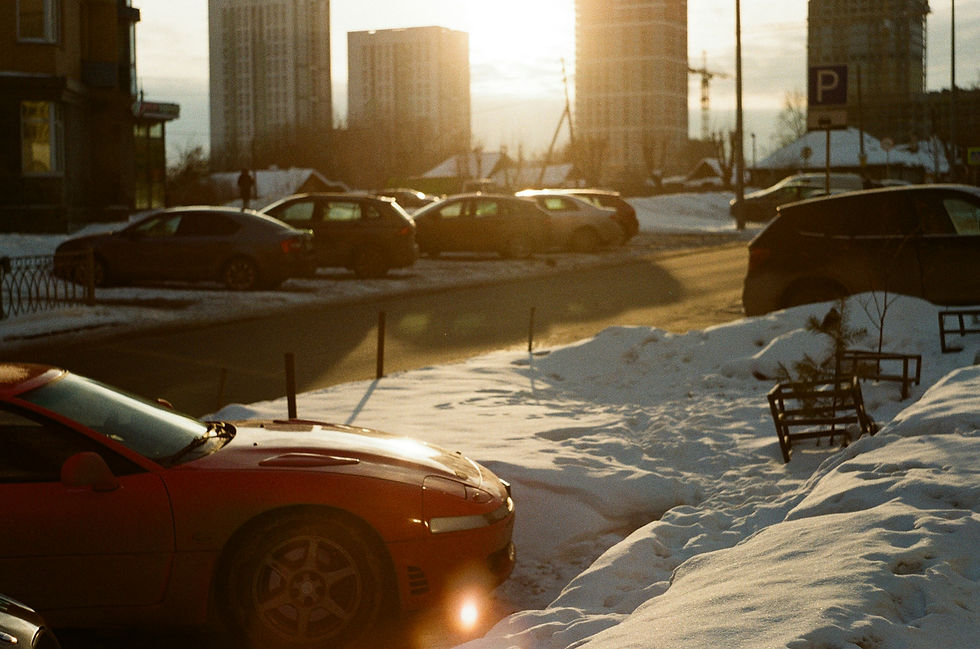
Winterizing your car—especially a JDM import—isn’t just about comfort; it’s about survival. It doesn't matter if you bought this car for prestige or necessity; no one wants to see their car devalue and degrade. The Canadian cold doesn’t care how rare or special your ride is, and if you don’t prepare, winter will turn your dream car into an expensive snow sculpture.
So, slap on those winter tires, swap out those fluids, and invest in some rust protection before the first snowfall hits.
But not all Japanese vehicles are sissies in the snow. There are some real winter warriors that can definitely take what Canada can dish out. Take a look at our winter buying guide to see some excellent choices (and prices) in our following-up article out at the end of November!

Have you winterized your JDM for Canadian roads? Got any horror stories about learning these lessons the hard way? Drop a comment below—I’d love to hear how your car handled (or didn’t handle) its first real winter!.
~Dream


Comments